


Why Choose Us?
Rich experience
Willing corporation Ltd. was founded after two generations' efforts. We started our international business since 1970s, are mainly focus on the hardware market. Dedicating long term business relationship, carrying out professional matters and earn the reputation.
Excellent service
It is our mission to be the first-class international commerce industry service provider. Providing professional and outstanding customer service at all times. We value sourcing, creating, and selling products that are of high quality and ethically made.
Professional team
Our fantastic team work tirelessly to source unique products and ensure shipment of the best quality items at the most competitive prices and stable production through our trusted supply chain.
High quality
Through integration of industry and foreign trade, we have more than 500 factories and reliable freight forwarder in deeply cooperation which can provide cost-effective products you need.
What Is Work Light
Work light is portable luminaires employed in places with dim or no illumination. These are temporary, versatile devices that enable activities when daylight or artificial light is inadequate.
Work light fixtures are deployed when personnel need to complete tasks in a dark location, they are essential safety equipment. Light sources are typically incandescent, fluorescent, or LED technologies. Luminaires are mounted on a pole, tripod, base, clamp, or suspended to provide basic overhead illumination. Some lights can be handheld and may feature an articulating support or joint to focus the light.
These instruments are reliable in providing continuous and steady radiance. Their affordability and ease of use make them a preferred choice in carrying out inspection, repair, maintenance, and other tasks. The tools occupy minimum space and limit superfluous heat generation. Work lights are relatively inexpensive and easy to setup. Work lights require an electric power supply that can come from mains electricity, a battery, generator, or vehicle.


Work lights have grown out to be the most preferred construction lights. This is due to the fact that these are portable work lights that offer excellent flexibility. You can use these lights on trucks and other vehicles that are used on construction sites. Furthermore, the lights disperse an overall 360 degrees beam angle illumination to ensure that every corner of the construction site is illuminated without any blind spots.
It promotes instant functioning
One of the best points of keeping work lights is that they are ideal for functioning promptly. So, whether you want to turn the lights on or off, they will not take time. This is a plus point because on construction sites, every second counts. Promoting instant functioning can simply help in promoting a suitable working environment where you can count on lights that functions instantly.
Have a longer lifespan
One of the preferred features of the work light is that they come with a longer lifespan. The expected lifespan of string work lights and the temporary work light with cage is 50,000 hours. This is quite an impressive operational hours ensuring that the light will not go off any sooner
The portable work light is energy efficient
The portable work light is an energy-efficient alternative compared to conventional construction lights. As a result, it consumes less energy which reflects in the power consumption bills. Considering construction sites as one of the prime locations requiring high energy input, work light is helping reduce energy consumption costs. This result in a 60-70% fall in the total power consumption bills.
The temporary work light with cage is easy to handle
Since the work lights are compact in size, they are easy to handle and manage. You are not supposed to carry an entire lighting set-up in order to illuminate the construction site. In fact, you can just count on this portable lighting fixture. You can place these lights anywhere you want to focus, or you can use them on your construction mobile, inside the tunnels, or in any other dingy space where you don't have flexibility.
The construction lights are durable and reliable
A construction site is undoubtedly a risky premise where accidents are uncertain. However, if you consider the portable work light as a lighting option, you can lower that risk. The lights are a reliable fixture that does not contain a glass casing. As a matter of fact, the temperature shoots up in extreme conditions that directly impact the fixture. However, this will not be an issue with the work light. Furthermore, the light is durable and works for an impressive amount of time that too without flickering, dimming, or compromising its performance over time.
Work light does not emit harmful toxins
Work lights do not emit any harmful toxins to the environment. Compared to conventional lights that generate excess illumination by simultaneously emitting harmful UV rays, the work light is nothing but beneficial. Moreover, these lights offer bright illumination without emitting harmful gases and toxins to the environment.
Work lights are environmentally friendly
Using work lights directly benefits the environment. The environmentally friendly portable work light doesn't contain mercury or lead. These are supposedly some harmful agents that can affect the environment. Thus, opting for work light like the portable work light and string work lights can help you save the environment via their environmentally-friendly nature.
They are safer to use
Since the fixture does not heat up too much while functioning, there are fewer chances of fixture failure. In addition, the portable feature allows you to set up the light anywhere you like. This is a benefit from the safety standpoint because the hefty fixtures with complicated setups are quite challenging to operate. They contain some risk factors like electric shocks, construction site mishaps, heat emission, power failure, etc. This is why work lights are safer to use, as such hazardous scenarios do not surround them.
They don't run off easily
Since the work lights come with an impressive lifespan, they don't come with the chances of fixture failure. Adding to that, these durable construction lights will not go off any sooner. In fact, they are designed to retain flickering and dimming as long as the light works. You will not need to change the light before its estimated lifespan.
They are cost-efficient construction lights
Following all these benefits, they simply reflect on the cost-efficiency benefit. work lights are efficient lights that promote longevity and help in reducing power consumption costs. Moving on, compared to incandescent, temporary work light with cage offers great performance by simultaneously keeping the efficiency feature as the prime focus.
How Many Lumens Do I Need for a Work Light
When it comes to choosing an work light, one of the most important considerations is the amount of light it produces, which is typically measured in lumens. Lumens refer to the total amount of visible light emitted by a light source, and the number of lumens you need for a work light will depend on the type of work you are doing and the size of the area you need to illuminate.
As a general rule of thumb, the recommended range of lumens for a work light is between 1000 and 5000 lumens. This range can vary depending on the specific application.
For detaiwork or inspection tasks that require high accuracy, such as electronics or automotive repairs, you will need a work light with at least 1000-2000 lumens. This level of illumination will provide sufficient light to see small details clearly, without creating glare or shadows that could interfere with your work.
For general-purpose lighting in a workshop or garage, you may need a work light with 2000-4000 lumens. This level of illumination will provide a bright and even light source, allowing you to see clearly and work comfortably for extended periods of time.
For outdoor work, such as construction or landscaping, you may need a work light with 3000-5000 lumens to provide enough illumination in a large area. This level of brightness will help you see clearly in low light conditions and ensure your safety while working in potentially hazardous environments.
It's worth noting that lumens are just one factor to consider when choosing a work light. Other factors such as the beam angle, color temperature, and CRI (color rendering index) can also affect the quality of light and the effectiveness of the work light for a particular task.
The beam angle refers to the width of the light beam and can vary depending on the type of work light you choose. A narrower beam angle can provide more focused illumination for specific tasks, while a wider beam angle can provide broader coverage for larger areas.
Color temperature refers to the color of the light emitted by the work light and is measured in Kelvin (K). A higher color temperature, such as 5000K or above, will produce a brighter and whiter light, while a lower color temperature, such as 3000K or below, will produce a warmer, more yellow light.
CRI (color rendering index) measures the ability of a light source to accurately render colors compared to natural sunlight. A higher CRI indicates that colors will appear more true-to-life, which can be important for tasks that require accurate color perception, such as painting or photography.
The amount of lumens you need for a work light will depend on the specific application and the size of the area you need to illuminate. When choosing a work light, consider not only the number of lumens but also other factors such as the beam angle, color temperature, and CRI to ensure you have the right lighting solution for your needs. With the right work light, you can work comfortably and safely, and achieve the best possible results for your projects.
There are four main types of work lights: lamps, trouble lights, clamp lights and flashlights.
Lamps can be floor-standing or table models. Some feature an adjustable base in a tri-pod design. Others are cordless, have rechargeable batteries or a moveable head so you can pinpoint where you want the light to shine.
● Clamp lights clamp to table tops, workbenches and columns and provide stable light wherever you need it.
● Flashlights and head lamps can provide light in tight situations, such as behind a wall where you can't easily place another type of light.
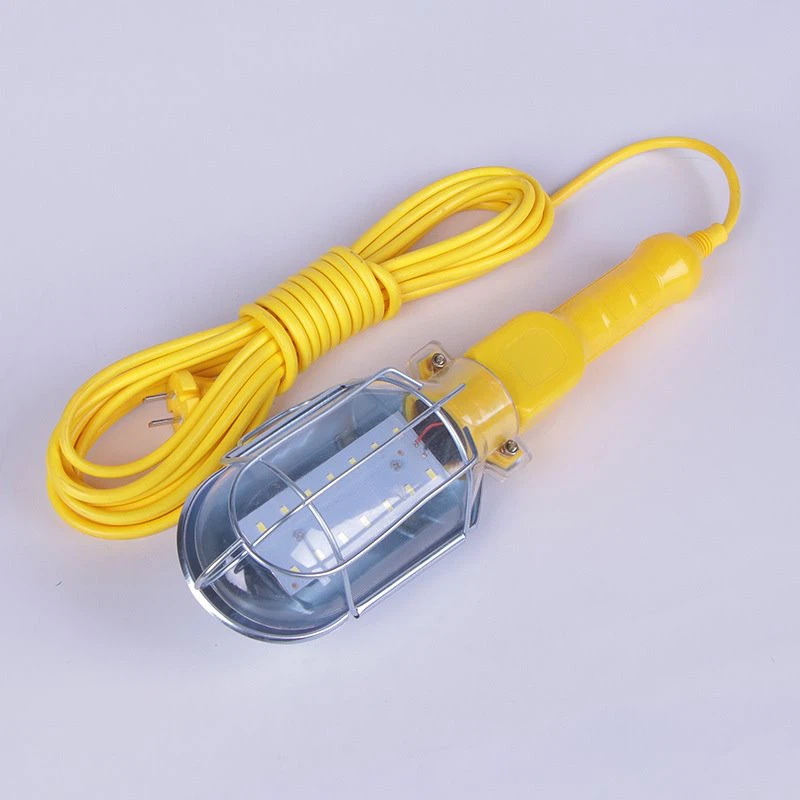
● Trouble lights can be identified by the caged enclosure that covers the bulb. They also include a handle. These features allow them to be used for illuminating awkward spaces, while their durability helps them withstand a wide variety of workplace situations. Useful as supplemental light when ambient light isn't sufficient.
What Are the Uses of Work Lights
Interior lighting
Whether you're doing your chores at home, working on your computer in the office, or taking photographs in your studio, you will need good lighting. Lights can be used as spotlights or floodlights. Spotlights for when you want to focus on a specific area, such as directing lights to your subject in photography, and floodlights when you want to illuminate a wide area, such as a portion of your office. Different color filters can also be placed on lights. They give great effect when used in stage plays or even when you simply want to have a more dramatic lighting in your living room or bedroom.
Exterior lighting
Outdoor lights are not only beautiful, but are very useful as well. You could mount them in your porch, light up gardens, and illuminate recreational areas such as parks, squares, and public landscapes, among others. In public areas, people appreciate proper lighting, because they feel safer when hanging out at night. And when used at home, they could help you determine who are coming or passing in front of your house in the evening. Leaving them on all night would not cost you a lot of money as they are extremely energy efficient.
Construction lighting
Construction workers rely on powerful artificial lights when working inside houses, buildings, and on the road, when the work has to be done in the evening. When the work is inside houses and buildings, permanent lights are probably not instalyet or at least not working while the construction is ongoing. A light bar is easy to install and should not cause distraction even in small spaces. Construction work on the road during nighttime, on the other hand, is important so not to create traffic buildups during rush hours. As there will be a lot of workers in the area, powerful lights are needed. Light bars will be perfect in these situations.
Off road lighting
Unlike in city driving, off road drivers experience challenges like heavy rain or heavy snow in the middle of nowhere. They could be in rarely-used roads that are muddy and rocky, they could be in mountainous areas; they could be driving along riverbanks. Their situations often lead them to driving in the night. With the difficult terrains an off road driver has to pass through, off road lights would be essential, as they are powerful enough to penetrate splashes of mud and dirt.
Boat lighting
This one's a beauty. A lot of boats are outfitted with lights to make them pretty when they sail at night. They can be mounted inside or outside the boat. Light bars are strong and waterproof so it would not matter if they are placed under the boat, or if water splashes on them continuously.
Excellent Characteristics of Work Light
Portable
You can move it everywhere you want to be lit up. You can grab it in your hand with robust holder. You can put it on the ground.
Emergency
Where lights are not pre-instaland when emergencies come up. Portable work light would be your right choice.
Temporary usability
How can you solve the problem that need to light up somewhere only for temporary use? Portable work light can make you work at night clearly and safely. If install light in a fixed position. Once you finish your work the mounted light will result in waste. Portable work lights are not. You can take it away and use it elsewhere.
Adjustable
When coming to its adjustable feature. What we have to mention are angle adjustment and power adjustment these two convenient performances.
Industrial applicability
Not like other low power portable torch in life. The main usage of this portable work light is industrial. When you have to work at night , one our this light is worth many other torches and electric storage lights. Plus , high light efficacy make it suit for use in large area.
Work Light Maintenance Tips
Many modern businesses utilize work light. These bulbs are long lasting and energy efficient. They also have many practical benefits for businesses and employees.
Choose the right bulbs
Different environments may require different types of bulbs. As a result, choosing the correct brightness, wattage, and color temperature is essential.
Regulate the temperature
Although LED bulbs stand up better to hot temperatures than other bulbs, you should still maintain a cooler temperature around them. If you expose your bulbs or fixtures to higher temperatures, they may start to lose efficiency and burn out. Many LED bulbs can withstand temperatures of up to 185 Fahrenheit before failing, but you should try to ensure they don't come close to that.
Reduce humidity
Another essential work light maintenance tip is to watch the humidity levels. Excessive moisture in the air can cause lasting damage to the electronic components inside the bulbs. When working in humid workspaces, ensure there's proper ventilation and a dehumidifier if necessary.
Clean them regularly
One of the largest advantages of LED bulbs is their longevity. However, because these bulbs can last for years before they burn out, many people neglect to clean them and the areas around them. Built-up dust can short out your bulbs and cut their lifespan, so remember to perform an annual or semi-annual cleaning of your light fixtures to protect your bulbs.
Inspect them routinely
When performing maintenance, getting regular inspections of your lights is always a good idea. A licensed technician may help you determine if there are any issues with the electronic components in your bulbs or if you need to adjust the wiring in your fixtures.
6 Steps to Choose A Best Work Light
Consider the brightness and color temperature
The brightness of a work light is measured in lumens, and the higher the number, the brighter the light. You should choose a work light with a lumen rating that suits your needs. If you need a work light for a small project, a light with a lumen rating of 1000 to 2000 should be enough. If you need a work light for larger projects, a higher lumen rating of 3000 or more is recommended.
Color temperature is another important factor to consider when choosing a work light. The color temperature is measured in Kelvin (K), and it refers to the warmth or coolness of the light. A work light with a color temperature of 2700K to 3500K produces warm yellow light, which is suitable for indoor use. On the other hand, a work light with a color temperature of 5000K to 6500K produces cool white light, which is ideal for outdoor use.
Evaluate the power source
Work lights can be powered by batteries, AC power, or both. If you plan to use your work light in areas without access to electrical outlets, then you should choose a work light that is battery-powered or has a battery backup. Battery-powered work lights are ideal for outdoor use, and they are easy to move around. However, you should check the battery life and charging time to ensure that the work light meets your needs.
AC-powered work lights are ideal for indoor use and can be plugged into a wall outlet or an extension cord. If you choose an AC-powered work light, ensure that the cord length is long enough to reach your work area. Also, you should check the voltage requirements to ensure that the work light is compatible with your electrical system.
Check the durability and safety features
Work lights are designed for use in demanding environments, so they should be durable and safe to use. Look for work lights with rugged construction and features such as shock resistance, waterproofing, and dust resistance. You should also check if the work light has a safety certification, which ensures that the work light meets the safety standards.
Evaluate the design and ease of use
The design of a work light can affect its ease of use and portability. Look for work lights with ergonomic handles, adjustable brackets, and lightweight construction for easy transportation. You should also consider the size and weight of the work light, especially if you plan to carry it to different job sites.
Another important feature to look for is the ease of use. The work light should have simple controls for adjusting the brightness and color temperature. Some work lights also come with additional features such as a USB port for charging other devices.
Consider the warranty and customer support
A work light is an investment, and you want to ensure that it is backed by a reliable warranty and customer support. Look for work lights that come with a warranty of at least one year, and check the terms and conditions of the warranty. Also, ensure that the manufacturer provides excellent customer support in case you need assistance with the work light.
Consider the price
Price is an important factor to consider when choosing a work light. However, it shouldn't be the only factor. A higher price doesn't necessarily mean a better product, and a cheaper product may not always meet your requirements.
When choosing a work light, consider your specific needs and preferences, such as brightness, portability, adjustability, battery life, and durability.
Our Factory
Willing Corporation Limited
We started our international trade since 1980s, Willing corp. was founded after two generations' efforts. Dedicating long term business, carrying out professional matters and earn the reputation.

Our Client
Our client mainly located in Europe, North America, and Asia. Among them, there are more than five companies with a century-old business history. Over several generations of trades, we have become the purchasing office in China for some Polish and Japanese clients. We also sincerely hope that in the process of getting along with you, you can be a life-time client with us.

FAQ
We're well-known as one of the leading work light xxx manufacturers and suppliers in China. Please feel free to buy or wholesale high quality work light xxx at competitive price from our factory. For more information, contact us now.
Laser Distance Meter Outdoor, Brass Travel Padlock, Grey Iron Heavy duty Padlock