


Why Choose Us?
Rich experience
Willing corporation Ltd. was founded after two generations' efforts. We started our international business since 1970s, are mainly focus on the hardware market. Dedicating long term business relationship, carrying out professional matters and earn the reputation.
Excellent service
It is our mission to be the first-class international commerce industry service provider. Providing professional and outstanding customer service at all times. We value sourcing, creating, and selling products that are of high quality and ethically made.
Professional team
Our fantastic team work tirelessly to source unique products and ensure shipment of the best quality items at the most competitive prices and stable production through our trusted supply chain.
High quality
Through integration of industry and foreign trade, we have more than 500 factories and reliable freight forwarder in deeply cooperation which can provide cost-effective products you need.
What Are Garden Sprayers
Garden sprayers are essential tools for maintaining a healthy and vibrant garden. They allow you to apply fertilizers, pesticides, herbicides, and other treatments efficiently and effectively. Choosing the right garden sprayer and understanding its proper use can greatly enhance your gardening experience.


Benefits of Garden Sprayer
Portability and flexibility
The garden sprayer's lightweight design and comfortable straps allow the operator to move freely through the fields or garden, reaching inaccessible areas with ease.
Precision application
With the adjustable nozzle and lance, the sprayer enables accurate targeting of the spray, reducing wastage and ensuring optimal coverage.
Time and labor efficiency
The garden sprayer allows for efficient spraying, saving time and labour compared to manual application methods.
Versatility
The sprayer can handle various liquid solutions, including pesticides, herbicides, fungicides, and fertilizers, making it a versatile tool for multiple agricultural and horticultural applications.
Cost-effectiveness
The garden sprayer is a cost-effective solution for small to medium-sized farms or gardens, providing excellent value for its price.
There are three main types of sprayers. Review the features below to find the best sprayer for your garden.
1. Hose-End Sprayers
● Hose-end sprayers are the simplest and least expensive of the category.
● They attach to a regular garden hose.
● You add concentrated material to the hose-end sprayer jar or bottle, and an adjustment on the bottle determines the amount you use. The force of the water through the hose pulls the material up from the bottle, mixing and diluting the chemicals with the water.
● A built-in, anti-siphon device prevents unused material from being pulled back into your water supply.
2. Tank Sprayers
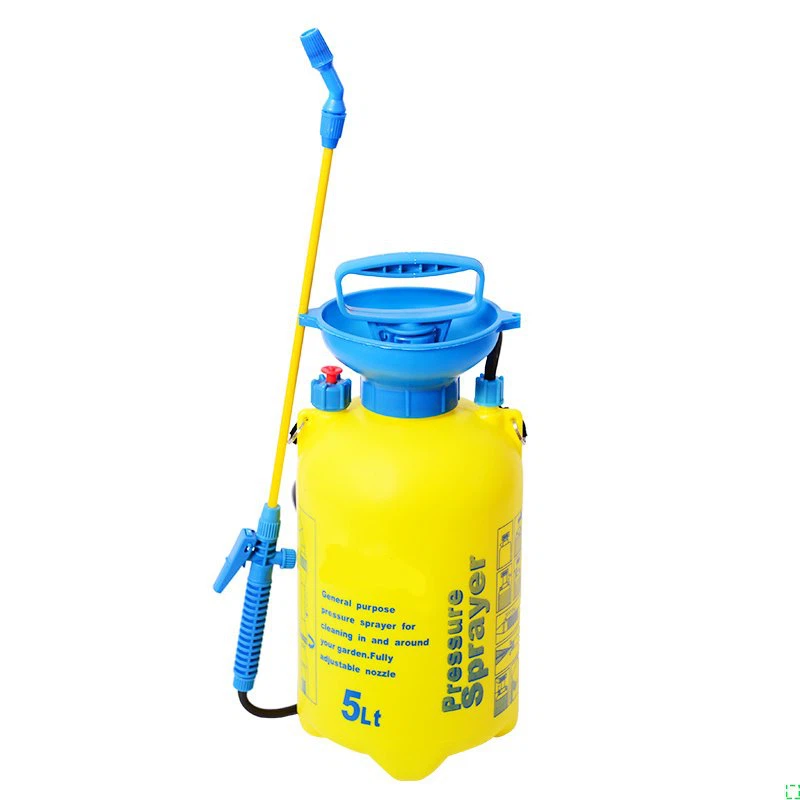
● Professional compression sprayer tank.
● Tank or compression sprayers are the most common types of spray equipment.
● How they work: tank sprayers combine concentrated chemicals and water in the tank. The handle is pumped to pressurize the remaining air and the sprayer delivers the material under pressure.
● A control lever on the wand controls the spray pattern and amount.
● Compression, or pressurized tank sprayers, provide a precise, on-target, non-drift spray effective for soil and lawn pests. Adjust the tank sprayer for a coarse and drenching spray, a concentrated stream or a fine mist.
● Tank sprayer capacities range from 1 quart to over 3 gallons for handheld models.
3. Backpack Sprayers
● A backpack sprayer.
● Backpack sprayers operate in the same manner as the handheld compression sprayer.
● Homeowner-type backpack sprayers hold up to 4 gallons.
● The over-the-shoulder design makes it easier to carry the heavier load.
● Some backpack sprayer models also use a lever-style pump to maintain pressure without removing the unit from your back.
Steps to Follow While Using Garden Sprayers
Level-operated sprayers are the most common type of garden sprayer. You must follow the mentioned steps while you use such devices.
Step 1. Instructions
Before you should use the sprayer, you must make sure to read the instructions given by manufacturers carefully.
Step 3. Selection of the right nozzle
The nozzle of a garden sprayer dispenses pesticides and other chemicals available in liquid form. The nozzles of a sprayer are available in different sizes to determine the exact amount you should spray.
Step 2. Device test
Before you should use herbicides, test the device with water. By doing so, you will make sure of the operation of your garden sprayers. Moreover, the step is essential to identify leakage problems.
Step 4. Calibrate the sprayer regularly
In the last step, you must calibrate the garden sprayer by using clean water regularly.

Garden sprayers are helpful tools for quickly and efficiently treating the yard and garden with liquid fertilizers, herbicides, and insecticides. But to ensure against over- or under-spraying an area, it's important to keep the same walking speed and distance from the target during use.
Additionally, users should ensure that the garden sprayer is properly pressurized at all times so that it's easier to maintain an even spraying pressure. By taking the time to balance the pressure, the same amount of solution will be applied to each area of the yard and garden.
Before starting to use a garden sprayer, adjust the shoulder straps so that the unit fits properly. You don't want to have to deal with a shifting tank of fertilizer, water, or pesticide while working because it will take extra effort to control the moving weight, increasing fatigue.
In general, remember to:
● Maintain a uniform walking speed.
● Balance the spraying pressure.
● Adjust the straps before use for a secure fit.
What to Consider When Choosing Garden Sprayer
Consider the pressure (PSI), tank capacity, the type of liquid delivery system, and the type of pump that pressurizes the garden sprayer.
Pressure
Pounds per square inch (PSI) is the unit of measure identifying the amount of pressure a backpack herbicide sprayer can propel through its nozzle. The average for a garden sprayer is around 70 PSI, but smaller models can use as little as 40 PSI, and a commercial garden sprayer may use as much as 150 PSI.
Pressure is important to ensure that a garden sprayer operates effectively. Too little pressure will produce an uneven spray that reduces the effectiveness of its contents, while too much will prove excessive for a smaller yard.
If you have a large yard with many hard-to-reach spots, or you are a professional who works in many different-size spaces, a sprayer with a PSI rating of 70 or above is your best bet. For those with average-size or smaller yards, a moderate rating between 40 and 70 PSI is more than enough to spray your space.
Piston vs. Diaphragm
Garden sprayers generally come in one of two types of liquid delivery systems: Piston pump and diaphragm pump.
● A piston pump works by drawing liquid from the tank into an enclosed chamber on the upstroke and pushing the liquid out through the outlet valve or nozzle on the downstroke. Piston pump sprayers are more popular with the average home dweller because of their simple design, easy accessibility for repairs, and beneficial PSI ratings.
● A diaphragm pump is designed for the safety of professionals who use potent pest control and weed killer chemicals. It is a sealed system that works by moving liquid from one side of a chamber to the other with a diaphragm so that one side is always full and one side is always empty. The diaphragm pump cannot produce the same pressure as the piston pump but is better suited to pros because it's made of more chemically resistant materials.
Manual vs. Motorized
Garden sprayers use an internal pump to draw liquid out of the chamber, through a hose, and out through a wand and nozzle. This pump can be operated manually, or an electric garden sprayer will often use a motorized system—the pricier option.
Manual garden sprayers operate via a hand pump attached to the backpack chamber. Pumping manually for an extended period can cause muscle fatigue and pain, so while this style of sprayer is fine for smaller yards, once-per-season jobs, and the average home dweller, it's less suited to professionals who have to spray for hours at a time.
Motorized garden sprayers are powered either by battery, with a battery garden sprayer offering more versatility and a simpler setup. A motorized sprayer automatically pumps the liquid from the backpack chamber to the wand, requiring no physical work by the user. Intended for large projects and long workdays, a motorized sprayer is a better choice for the busy professional who'll rely on it daily.
Why Use A Garden Sprayer
There are many reasons to use a garden sprayer, but the most important is that it saves time and energy. Applying water or chemicals by hand can be very tedious and time-consuming.
● With a garden sprayer, you can cover a large area in a short amount of time. This is especially important if you have a large garden or yard to take care of.
● A garden sprayer allows you to apply chemicals and pesticides more evenly. When you apply these products by hand, it's easy to miss spots or apply too much in one area. This can be harmful to your plants and cause them to die.
● A garden sprayer ensures that your plants get the right amount of chemicals and pesticides, which can help them stay healthy and thrive.
Applications of Garden Sprayer
The garden sprayer has a wide range of applications in gardening.
Applying pesticides
Garden sprayers are commonly used to apply pesticides for controlling pests such as insects, mites, and diseases that can damage plants. Sprayers allow for precise and targeted application of pesticides, ensuring thorough coverage and effective pest control.
Herbicide application
Garden sprayers are used to apply herbicides for weed control. Whether you need to treat a small patch of weeds or a larger area, a sprayer can help you apply herbicides directly to the weeds, minimizing the impact on surrounding plants.
Fertilizer application
Sprayers are used to apply liquid fertilizers, including foliar fertilizers, to provide essential nutrients to plants. This method allows for efficient nutrient absorption through the leaves and can be particularly beneficial for plants with nutrient deficiencies or during periods of rapid growth.
Watering plants
Garden sprayers can be used to water plants, especially delicate or sensitive ones. By adjusting the nozzle or spray pattern, you can provide a gentle mist or a direct stream of water to plants, ensuring they receive the right amount of moisture.
Applying foliar feeds and micronutrients
Sprayers are used to apply foliar feeds and micronutrients to plants, providing them with additional nutrients and promoting healthy growth. This method is particularly useful when plants have nutrient deficiencies or when soil conditions limit nutrient uptake.
Maintenance and Care of Garden Sprayer
Proper maintenance and care of a garden sprayer are essential to ensure its longevity, optimal performance, and safe operation. Here are some maintenance and care tips for a garden sprayer:
Cleaning
After each use, thoroughly clean the sprayer to remove any residue or leftover chemicals. Rinse the tank, wand, nozzle, and other components with clean water. Use a brush or sponge to scrub away any stubborn deposits. This prevents clogging and chemical buildup that can affect the sprayer's performance.
Regular inspections
Periodically inspect the sprayer for any signs of wear, damage, or leaks. Check the tank, seals, hoses, wand, and nozzle for cracks, tears, or deterioration. Replace any worn or damaged parts promptly to prevent further issues.
Lubrication
Lubricate moving parts such as the pump handle, wand trigger, and O-rings to ensure smooth operation. Use a lubricant recommended by the sprayer manufacturer to prevent corrosion and maintain proper functioning.
Storage
Store the sprayer in a clean and dry area, away from direct sunlight and extreme temperatures. Empty the tank completely before storing to prevent chemical residues from causing damage. If the sprayer has a pressure relief valve, release the pressure before storage.
Calibration
Periodically check the sprayer's calibration to ensure accurate application rates. This involves measuring the output of the sprayer over a given area to determine if it matches the intended application rate. Adjustments may be necessary if the sprayer is over- or under-applying liquids.
Replacement parts
Keep spare parts on hand, such as seals, O-rings, nozzles, and filters. These components may wear out over time and need replacement. Having spare parts readily available ensures that you can quickly address any issues and maintain the sprayer's performance.
Follow manufacturers instructions
Always follow the manufacturer's instructions and recommendations for maintenance, cleaning, and care specific to your sprayer model. They may provide specific guidance on cleaning agents, lubricants, or other maintenance procedures.
By following these maintenance and care tips, you can extend the lifespan of your garden sprayer, ensure its optimal performance.
Our Factory
Willing Corporation Limited
We started our international trade since 1980s, Willing corp. was founded after two generations' efforts. Dedicating long term business, carrying out professional matters and earn the reputation.

Our Client
Our client mainly located in Europe, North America, and Asia. Among them, there are more than five companies with a century-old business history. Over several generations of trades, we have become the purchasing office in China for some Polish and Japanese clients. We also sincerely hope that in the process of getting along with you, you can be a life-time client with us.

FAQ
We're well-known as one of the leading garden sprayer xxx manufacturers and suppliers in China. Please feel free to buy or wholesale high quality garden sprayer xxx at competitive price from our factory. For more information, contact us now.
Battery Operated Garden Sprayer, Garden Supplies, Trolley